
World Food Day: Growing Resilience, One Community at a Time
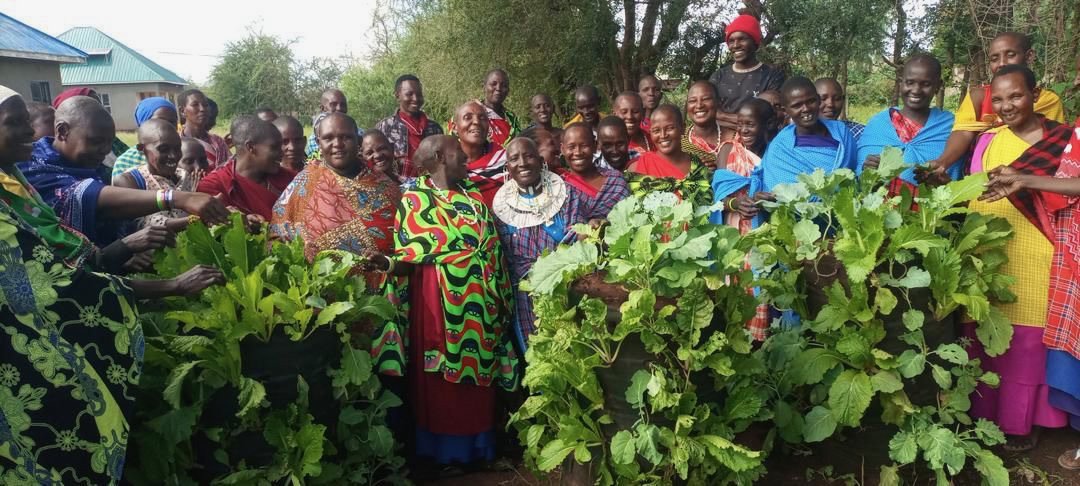
On World Food Day, Humanity For Children is celebrating the power of communities to grow healthier, more sustainable futures.
Food is about much more than having enough to eat. Nutritious food supports children as they grow, strengthens families, and contributes to the health and resilience of entire communities.
In the rural Tanzanian communities where Humanity For Children (HFC) works, however, access to a varied and nutritious diet can be challenging.
For generations, Maasai families have relied heavily on livestock, including cow's milk, alongside staples such as maize. But traditional nomadic lifestyles are changing, grazing land has become more limited, and climate change is adding new pressures. Together, these changes make it increasingly important for families to have additional, sustainable sources of nutritious food.
That is where HFC’s third pillar, Environmental Health and Sustainability, comes in.
Growing more than vegetables
Through our Nutrition & Permaculture Garden Project, HFC is helping communities explore sustainable ways to grow nutrient-rich vegetables close to home.
Permaculture and household vegetable gardening are relatively new concepts for many of the Maasai families we serve. Our approach is therefore not simply to provide seeds or build gardens. It is centered on learning, participation, and solutions that can work within the realities of daily community life.
At our garden training sessions, families, primarily women, can participate in hands-on learning about growing vegetables and incorporating them into family meals.
One of the solutions we are introducing is the garden tower, a compact vertical garden that requires little space and can be maintained close to a family's home, including within a traditional Maasai boma. The towers are constructed from durable landscape fabric by HFC-supported seamstresses, connecting the project to another source of community participation and opportunity.
We're also developing a seedling nursery so families can begin with healthy young plants rather than having to start entirely from seed.
Making every drop matter
Growing food sustainably also means thinking differently about water.
At Loiborsiret Secondary School, HFC is supporting the development of a graywater irrigation system that will reuse water from the 3 Sisters Dorm, a dormitory funded by HFC partners. The water can then support gardens and nurseries while giving students the opportunity to see a practical example of conserving and reusing an essential resource.
Our existing school garden work is already encouraging local vegetable production, practical learning for students, and sustainable food-production practices.
Alongside this work, HFC is building knowledge around indigenous and native tree seeds, nursery establishment, plant health, and sustainable management of the landscapes on which pastoralist communities depend.
An opportunity to grow
Our vision extends beyond one garden.
There are other schools and villages that would welcome the opportunity to develop gardens and bring these skills and additional food resources into their communities. What is missing is not interest, but the resources to make those opportunities possible.
That is where our donors and partners can make a difference.
Supporting HFC's permaculture work means investing in more than vegetables. It means helping communities gain additional tools to improve access to nutritious food, conserve precious resources, share practical knowledge, and become more resilient as the world around them changes.
On this World Food Day, we invite you to help us grow the next garden and bring these opportunities to more communities in Tanzania.
Plant a seed of change. Help a community grow.